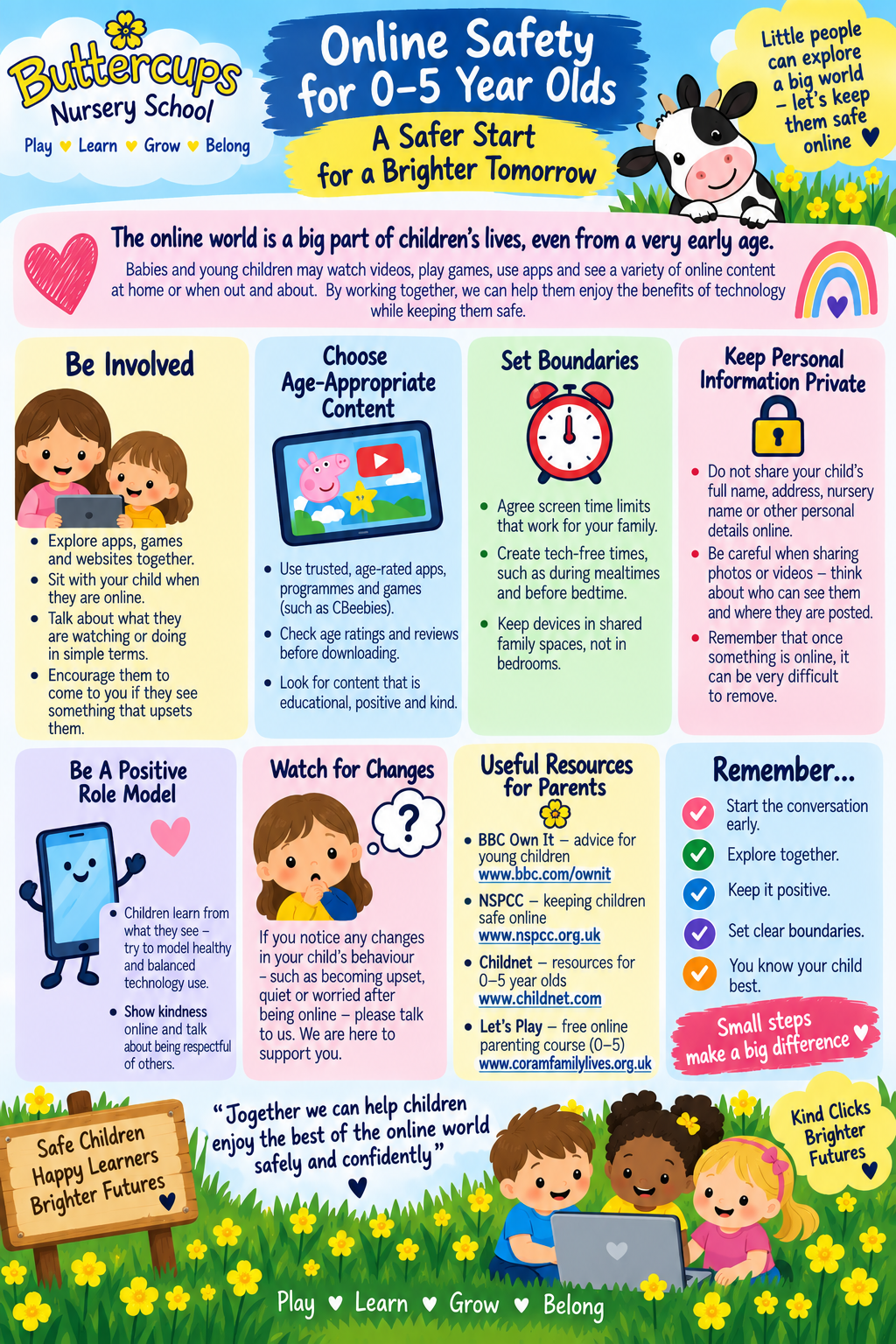
-
Our screen time policy
At Buttercups, we believe that the early years are a vital time for children to explore, play, discover, develop and learn through real-life experiences. For this reason, screen time is kept to a minimum in line with our nursery policy. We prioritise hands-on activities, outdoor play, meaningful interactions and opportunities to develop communication, creativity and social skills, ensuring children have the time and space to learn and grow through active exploration.
Some of our screen time rules are:
- Children under 2 should have no screen time. We recommend the same for home.
- Children aged 2-5 are advised no more than 1 hours of sedentary screen time in a
nursery week though “less is better”. Therefore at the nursery there will be a
limit of 60 minutes of screen time for a week. - We shall limit any screen time for the children to a limit of 15 minutes in any one
session for the children.
-
Tap to read

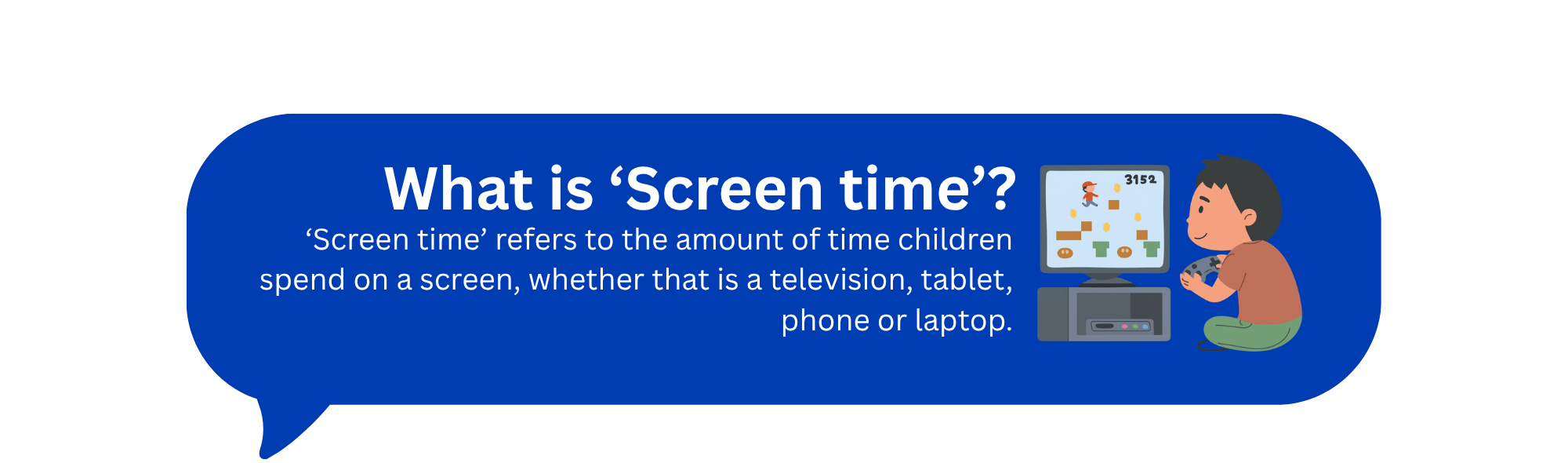
-
-
What is the Government Guidance?
The government’s screen time guidance is based on recommendations from an independent report which was undertaken by the Early Years Screen Time Advisory Group. The guidance feature on the government’s Best Start in Life website.
The report was commissioned by the government and was undertaken in response to its growing awareness of the amount of time young children spend on screens and the possible impact of screen time on children’s health and development.
It provided several practical, evidence-based recommendations for sharing advice with families about screen time for children aged up to five.
The guidance will be kept under review as new evidence emerges.

-
Why has the Guidance been created?
The government has said it recognises the importance of balancing the use of digital technology with supporting young children’s development through face-to-face, real life experiences.
The guidance forms part of its commitment to supporting caregivers to keep their children safe.
Growing evidence suggests that large amounts of unmanaged and passive screentime can have an impact on young children’s ability yo:
- learn and use new vocabulary
- communicate socially with others
- listen and pay attention
- manage their emotions
It can also affect children’s physical development and their quality of sleep.
-

-
-
What are the main points of the Guidance?
Screen time for children under two years
Avoid any screen time unless it’s a shared interactive activity with a focus on bonding and communication.Screen time for children aged two to five years
Limit screen time to one hour per day, with none the hour before bed or during mealtimes.Safe content
Choose slow-paced, age-appropriate programmes with simple content and use parental controls. Avoid social media and AI tools, toys and chatbots.
Watch togetherWatch screens together, asking questions and listening to your child’s thoughts and ideas. Turn off screens when finished so they’re not playing in the background.Phone use
Try not to spend long periods of time on your phone in front of your child. This may influence their attitudes towards screen time, as well as reducing shared interaction time.Safe screen swaps
Think of different ways you can safely use screen time together, like looking at digital photos taken together on a walk and talking about them.Children with SEND
This advice may need to be adapted for children with SEND, as screens can be a valuable communication and learning tool. However all young children benefit from screen-free time to sleep, play and interact.


-
How can screen time use be supported?
Settings may offer support by suggesting that caregivers:
- Use screens safely with their child, such as video calling friends or co-viewing age-appropriate programmes.
- Visit local libraries and community centres offering interactive workshops/activities as an alternative to screen time.
- Consider other low-cost activities that can be done together instead of screen time, such as junk-modelling having a picnic in the garden or going on a nature walk.
- Discuss with their child what safe screen swaps they would like to make and set limits on screen time together.
- Take a look at the government’s guidance – settings may provide access to it and offer opportunities for caregivers to discuss it with educators and/or other caregivers.
It is important to remember that each family situation is unique when considering how support is given and received around screen time for young children.
-